The preschool years are about much more than learning the alphabet, counting numbers, or recognizing colors. During these early years, children are also developing the social and emotional skills that will shape how they interact with others, manage their feelings, and approach learning throughout their lives. These abilities are just as important as academic skills because they help children build confidence, develop healthy relationships, and become resilient learners.
Social and Emotional Learning (SEL) is a key component of quality early childhood education. Through daily interactions, guided play, and supportive classroom experiences, preschoolers learn how to express emotions, solve problems, cooperate with others, and make responsible decisions.
In this article, we’ll explore the importance of social and emotional learning in preschool, how it benefits children, and how parents and educators can work together to nurture these essential life skills.
What Is Social and Emotional Learning?
Social and Emotional Learning (SEL) is the process through which children develop the knowledge, attitudes, and skills needed to:
- Understand and manage emotions
- Build positive relationships
- Show empathy toward others
- Make responsible decisions
- Communicate effectively
- Resolve conflicts peacefully
- Develop self-confidence
- Work cooperatively with peers
For preschoolers, these skills are introduced through age-appropriate activities, play-based learning, and positive interactions with teachers and classmates.
Why Social and Emotional Learning Matters in Preschool
The preschool years are one of the most important stages for emotional and social development. Children are learning how to interact with others outside their immediate family, adapt to routines, and navigate new experiences.
When children develop strong social and emotional skills, they are better equipped to:
- Build meaningful friendships
- Adapt to classroom routines
- Handle challenges with confidence
- Stay focused during learning activities
- Express their needs appropriately
- Develop independence
These abilities create a strong foundation for future academic success and overall well-being.
The Five Core Areas of Social and Emotional Learning
Social and emotional learning focuses on several key areas that support a child’s overall development.
- Self-Awareness
Self-awareness helps children recognize and understand their emotions, thoughts, and behaviors.
Preschoolers begin learning to identify feelings such as:
- Happy
- Sad
- Excited
- Angry
- Frustrated
- Nervous
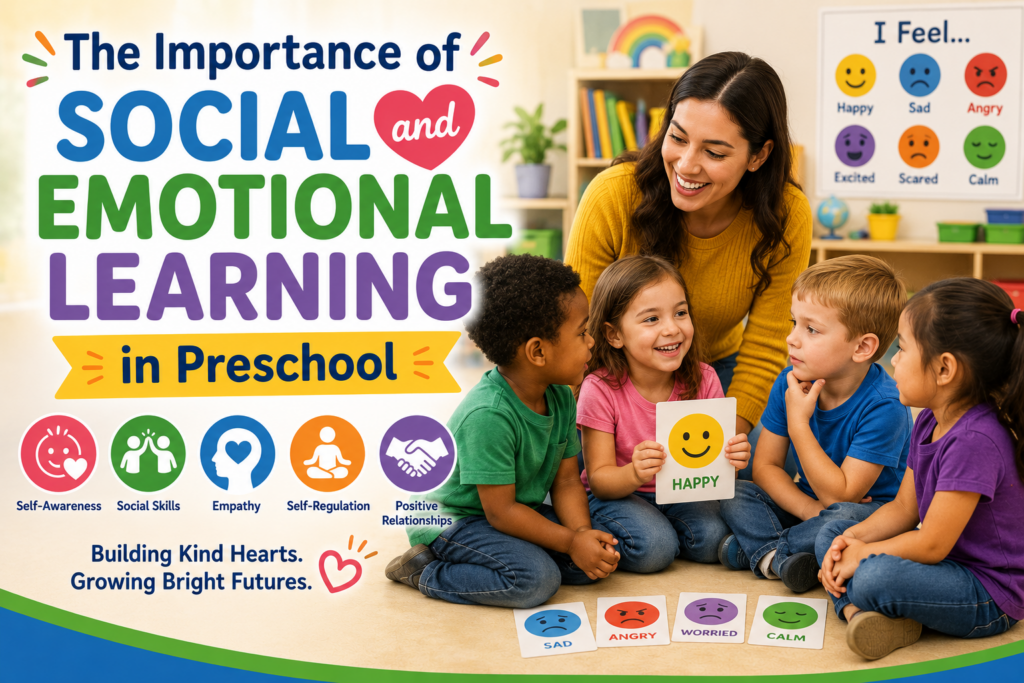
Teachers often use books, storytelling, songs, and emotion cards to help children recognize these emotions and understand that all feelings are normal.
As children become more aware of their emotions, they also begin to understand their strengths, interests, and preferences.
- Self-Management
Self-management involves learning how to regulate emotions and behaviors.
Preschoolers gradually learn to:
- Wait their turn
- Follow classroom rules
- Calm themselves when upset
- Handle disappointment
- Complete simple tasks independently
These skills are developed through consistent routines, gentle guidance, and positive reinforcement.
For example, a teacher may encourage a child to take deep breaths before reacting when frustrated during play.
- Social Awareness
Social awareness teaches children to understand the feelings and perspectives of others.
Children begin learning how to:
- Recognize when someone is sad
- Show kindness
- Respect differences
- Help classmates
- Celebrate diversity
Reading stories about different cultures and encouraging teamwork helps preschoolers develop empathy and appreciation for others.
- Relationship Skills
Strong relationships are essential for healthy development.
In preschool, children practice:
- Sharing
- Taking turns
- Listening
- Communicating clearly
- Working together
- Solving disagreements peacefully
These everyday interactions help children build trust, cooperation, and lasting friendships.
- Responsible Decision-Making
Even at a young age, children begin learning to make positive choices.
Teachers encourage preschoolers to:
- Think before acting
- Follow safety rules
- Respect classroom materials
- Solve simple problems
- Consider how their actions affect others
These experiences help children develop responsibility and confidence in making good decisions.
How Preschool Encourages Social and Emotional Learning
Quality preschool programs naturally incorporate SEL into daily routines rather than treating it as a separate subject.
Learning Through Play
Play is one of the most effective ways preschoolers develop social skills.
Activities such as:
- Building blocks
- Pretend play
- Dress-up centers
- Outdoor games
- Group puzzles
Encourage children to communicate, cooperate, negotiate, and solve problems together.
Circle Time Discussions
During circle time, teachers often discuss:
- Feelings
- Friendship
- Kindness
- Respect
- Classroom expectations
These conversations give children opportunities to express themselves while learning to listen to others.
Storytelling
Books introduce children to characters experiencing different emotions and challenges.
After reading a story, teachers may ask:
- How do you think the character feels?
- What could they have done differently?
- Have you ever felt the same way?
These discussions strengthen empathy and emotional understanding.
Cooperative Activities
Group projects teach children how to:
- Share responsibilities
- Encourage teammates
- Solve problems together
- Celebrate success as a group
Whether building a tower or creating an art project, collaboration helps children develop important interpersonal skills.
Benefits of Social and Emotional Learning
Better Academic Performance
Children with strong social and emotional skills are more likely to:
- Stay focused
- Follow directions
- Participate in class
- Ask questions
- Complete activities
Emotional security creates an environment where learning can flourish.
Improved Behavior
SEL helps reduce challenging behaviors by teaching children healthier ways to express emotions.
Instead of hitting or yelling, children learn to:
- Use words
- Ask for help
- Take calming breaks
- Practice patience
This leads to a more positive classroom environment for everyone.
Greater Confidence
As children successfully navigate social situations, they become more confident in their abilities.
Confidence encourages them to:
- Try new activities
- Speak up during class
- Explore creatively
- Solve problems independently
Stronger Friendships
Children with developed social skills find it easier to:
- Make friends
- Maintain friendships
- Resolve disagreements
- Show empathy
- Work in groups
These relationships contribute to emotional well-being and happiness.
Better Emotional Regulation
Learning how to recognize and manage emotions helps children respond appropriately in different situations.
Instead of becoming overwhelmed, preschoolers begin learning healthy coping strategies that support lifelong resilience.
How Parents Can Support Social and Emotional Learning at Home
Parents play a vital role in reinforcing SEL outside the classroom.
Talk About Feelings
Encourage children to name their emotions by asking questions like:
- How are you feeling today?
- What made you happy?
- What made you upset?
These conversations help children understand that all emotions are valid.
Model Positive Behavior
Children learn by observing adults.
Parents can model:
- Patience
- Kindness
- Respect
- Active listening
- Healthy conflict resolution
Demonstrating these behaviors teaches children how to interact with others.
Encourage Problem-Solving
Rather than immediately solving every problem, guide children by asking:
- What do you think you could do?
- How can we solve this together?
This encourages independence and critical thinking.
Read Together
Choose books that explore:
- Friendship
- Kindness
- Sharing
- Courage
- Empathy
Discuss the characters’ emotions and decisions after reading.
Create Opportunities for Social Interaction
Arrange playdates, visit parks, or participate in community activities where children can practice interacting with peers in different settings.
Signs Your Child Is Developing Strong Social and Emotional Skills
As children grow, you may notice they:
- Share toys willingly
- Express emotions with words
- Comfort upset friends
- Follow simple rules
- Adapt to routines
- Cooperate during group activities
- Solve minor disagreements peacefully
- Show curiosity and confidence
Every child develops at their own pace, but consistent support from parents and teachers encourages steady progress.
The Long-Term Impact of Social and Emotional Learning
The benefits of SEL extend well beyond preschool.
Research consistently shows that children with strong social and emotional skills are more likely to:
- Perform better academically
- Build healthy relationships
- Develop resilience during challenges
- Demonstrate leadership skills
- Make responsible decisions
- Experience improved mental well-being
- Succeed in future careers
These skills become valuable throughout adolescence and adulthood.
Why Social and Emotional Learning Is a Priority at Little Stars Childcare
At Little Stars Childcare, we believe that a child’s emotional well-being is just as important as academic readiness. Our preschool program is designed to help children develop confidence, empathy, communication, and independence through meaningful daily interactions and engaging, play-based learning experiences.
Our caring educators create a nurturing environment where children feel safe to express themselves, build friendships, and explore new ideas. Through cooperative activities, storytelling, creative play, and guided problem-solving, we help children develop the social and emotional skills they need to thrive in school and beyond.
We also value strong partnerships with families, recognizing that children benefit most when parents and teachers work together to support their growth.
Conclusion
The importance of social and emotional learning in preschool cannot be overstated. While academic readiness is essential, children also need the confidence, empathy, communication, and emotional resilience that SEL provides. These skills help preschoolers navigate friendships, solve problems, manage emotions, and approach new experiences with curiosity and confidence.
By choosing a preschool that prioritizes social and emotional development alongside academic learning, parents are investing in their child’s long-term success. At Little Stars Childcare, we are committed to nurturing the whole child—supporting intellectual, social, emotional, and physical development in a caring and engaging environment where every child can grow, learn, and shine.