
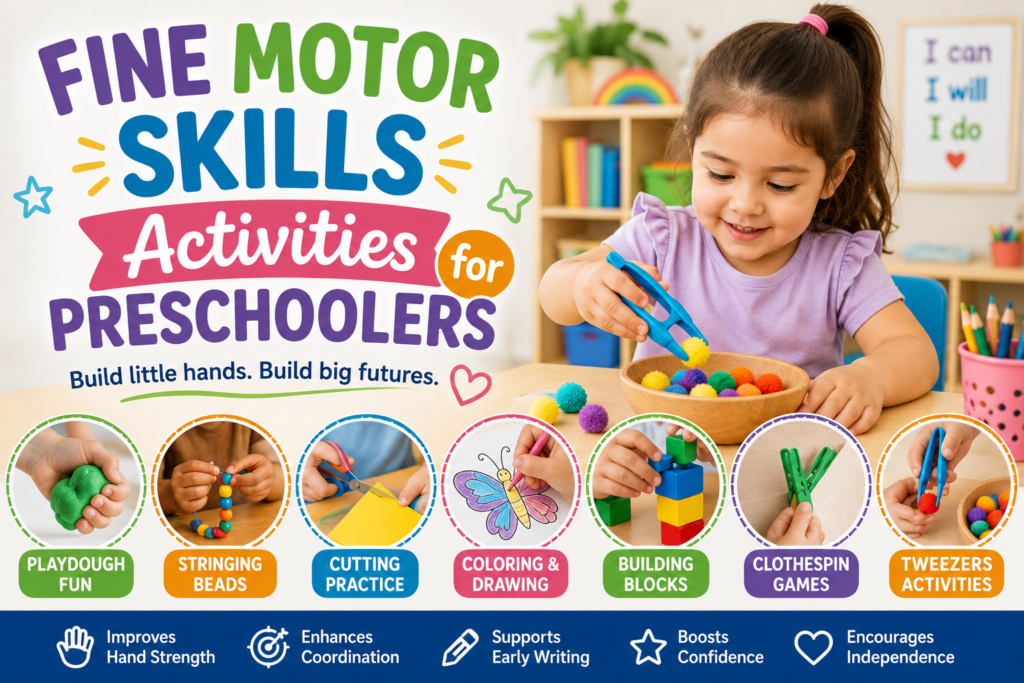
Fine motor skills are an essential part of a child’s early development. These skills involve the small muscles in the hands, fingers, and wrists that allow children to complete everyday tasks such as holding a pencil, buttoning clothes, cutting with scissors, and tying shoelaces. Even as adults, activities that depend on steady hands and precise coordination—whether it’s creative hobbies, sports, or interactive online experiences like those reviewed at https://thelocationke.com/betiton-canada-bonuses-slots-sports-review-and-payouts/—continue to draw on these early-developed skills. During the preschool years, strengthening these muscles helps children gain independence while preparing them for kindergarten and future academic success.
The good news is that developing fine motor skills doesn’t require expensive toys or complicated lessons. Through simple, hands-on activities, preschoolers can build strength, coordination, and confidence while having fun.
In this guide, we’ll explore the importance of fine motor skills activities for preschoolers, the benefits they provide, and easy activities parents and educators can enjoy together.
What Are Fine Motor Skills?
Fine motor skills involve the coordination of small muscles in the hands and fingers with the eyes. These skills help children perform tasks that require precision and control.
Examples of fine motor tasks include:
- Holding a crayon or pencil
- Drawing and coloring
- Using scissors
- Stacking blocks
- Turning pages in a book
- Buttoning clothing
- Zipping jackets
- Using eating utensils
- Picking up small objects
As children practice these everyday movements, they strengthen their hand muscles and improve coordination.
Why Are Fine Motor Skills Important?
Strong fine motor skills support many areas of development, including academic learning, independence, and self-confidence.
Some key benefits include:
Improved Writing Skills
Children need strong hand muscles to grip pencils correctly, control writing tools, and form letters with ease.
Greater Independence
Fine motor development enables preschoolers to complete daily tasks such as dressing themselves, brushing their teeth, opening lunch containers, and feeding themselves.
Better Hand-Eye Coordination
Activities that require children to use both their eyes and hands together improve coordination, which is important for sports, art, and classroom learning.
Increased Confidence
As children master new skills, they become more confident in trying new activities and solving problems independently.
Signs Your Preschooler Is Developing Fine Motor Skills
Every child develops at their own pace, but many preschoolers begin to:
- Hold crayons using a more controlled grip
- Draw simple shapes
- Cut along straight lines with child-safe scissors
- Stack blocks into tall towers
- String large beads
- Complete simple puzzles
- Use forks and spoons independently
- Turn book pages one at a time
These milestones indicate growing hand strength and coordination.
Fun Fine Motor Skills Activities for Preschoolers
1. Playdough Creations
Playdough is one of the best tools for strengthening little hands.
Encourage children to:
- Roll balls
- Flatten dough
- Pinch small pieces
- Create animals
- Use cookie cutters
- Shape letters and numbers
These squeezing and rolling motions build finger strength while encouraging creativity.
2. Stringing Beads
Provide large beads and a thick string or pipe cleaner.
Children can:
- Sort by color
- Create patterns
- Count beads
- Design necklaces
This activity improves hand-eye coordination and concentration.
3. Cutting Practice
Using child-safe scissors, let children cut:
- Straight lines
- Zigzags
- Curved lines
- Paper strips
- Magazine pictures
Always supervise children during scissor activities.
4. Coloring and Drawing
Offer crayons, markers, and colored pencils.
Encourage preschoolers to:
- Color inside shapes
- Trace letters
- Draw people
- Create imaginative pictures
These activities strengthen pencil control while promoting creativity.
5. Building with Blocks
Building towers, bridges, and houses helps children improve grip strength and coordination.
Ask children to recreate simple structures or invent their own designs to encourage problem-solving.
6. Sticker Fun
Peeling and placing stickers requires careful finger control.
Children can decorate:
- Paper
- Greeting cards
- Posters
- Coloring pages
This simple activity strengthens finger muscles while improving precision.
7. Clothespin Games
Using clothespins helps develop hand strength.
Ask children to:
- Clip clothespins onto cardboard
- Match colors
- Count clips
- Create patterns
These squeezing motions prepare children for writing tasks.
8. Puzzles
Age-appropriate puzzles help children develop:
- Finger dexterity
- Problem-solving
- Visual perception
- Patience
Start with large-piece puzzles before introducing more complex designs.
9. Tweezers and Pom-Poms
Using child-friendly tweezers, encourage children to pick up:
- Pom-poms
- Cotton balls
- Buttons (with supervision)
- Small blocks
Transfer objects into cups sorted by color or size.
This activity strengthens the pincer grasp needed for writing.
10. Painting with Brushes
Painting encourages children to practice controlled hand movements.
Experiment with:
- Thick brushes
- Thin brushes
- Sponge painting
- Finger painting
- Watercolor art
Art activities improve both creativity and fine motor control.
Everyday Activities That Build Fine Motor Skills
Many daily routines naturally support hand development.
Parents can encourage children to:
- Button shirts
- Zip jackets
- Stir pancake batter
- Wash vegetables
- Pour water into cups
- Fold towels
- Pick up toys
- Open snack containers
These simple tasks help children gain confidence while practicing important life skills.
Fine Motor Activities in Preschool Classrooms
Quality preschool programs incorporate fine motor development into daily learning.
Teachers often include:
- Art and crafts
- Sensory bins
- Manipulative toys
- Building centers
- Cutting projects
- Writing practice
- Science exploration
- Nature activities
Because children learn through play, these activities feel enjoyable while supporting essential developmental skills.
Tips for Parents
To encourage fine motor development at home:
- Keep activities fun and pressure-free.
- Allow children to practice independently.
- Offer praise for effort rather than perfection.
- Rotate activities to maintain interest.
- Provide age-appropriate materials.
- Limit excessive screen time and encourage hands-on play.
Consistency is more valuable than long practice sessions. Even 15 to 20 minutes of creative play each day can make a significant difference.
When Should Parents Be Concerned?
Every child develops differently, but consider discussing your child’s progress with a pediatrician or early childhood educator if they consistently struggle to:
- Hold crayons or pencils
- Pick up small objects
- Use child-safe scissors
- Feed themselves
- Complete simple hand activities appropriate for their age
Early support can help children strengthen these skills and build confidence before starting kindergarten.
How Little Stars Childcare Supports Fine Motor Development
At Little Stars Childcare, we understand that fine motor development is a vital part of early childhood education. Our preschool classrooms are filled with engaging, hands-on activities that encourage children to strengthen their hand muscles while having fun.
Through art projects, sensory play, puzzles, building activities, writing practice, and creative learning centers, our experienced teachers help children develop the coordination and confidence they need for everyday tasks and future academic success.
Our play-based curriculum ensures that children are learning naturally while exploring their creativity, building independence, and preparing for kindergarten in a supportive and nurturing environment.
Conclusion
Developing fine motor skills activities for preschoolers is about much more than preparing children to write. These activities build strength, coordination, confidence, and independence that children use every day at home and in the classroom.
From rolling playdough and stringing beads to coloring, painting, and helping with household tasks, every hands-on experience contributes to healthy development. By making fine motor practice fun and engaging, parents and educators can help preschoolers build the skills they need to thrive in kindergarten and beyond.
At Little Stars Childcare, we are committed to supporting every aspect of a child’s growth through meaningful, play-based learning experiences that inspire confidence, curiosity, and a lifelong love of learning.